

The site for writers of all genre, and the readers who love them. Find what you want to know.
Publishing
Book publishing is the process of making written content available to the public, involving stages like editing, design, production, marketing, and distribution. Authors can choose between two primary avenues: traditional publishing and self-publishing, each with distinct processes and levels of author control.
Traditional Publishing Process
In traditional publishing, a publishing house manages the entire process and assumes all financial risk in exchange for the rights to the book and a larger share of the royalties. The author typically needs an agent to secure a contract.
Write and Revise the Manuscript: The author completes a polished manuscript (for fiction) or a detailed book proposal with sample chapters (for non-fiction).
- Find a Literary Agent: The author queries agents who specialize in their genre. The agent acts as an intermediary, pitching the book to editors at publishing houses.
- Acquisition and Contract: A commissioning editor at a publishing house decides to acquire the book, and the agent negotiates a contract, including an advance against royalties and terms.
- Editing and Production: The publisher’s team handles developmental editing, copyediting, proofreading, cover design, and formatting.
- Sales and Marketing: The publisher’s sales team pitches the book to retailers (e.g., bookstores, online stores like Amazon) to secure orders, while the marketing and publicity teams run campaigns and arrange reviews.
- Distribution and Publication: The book is printed (or produced digitally) and distributed to warehouses and retailers. The book is then officially published and available for sale.
Self-Publishing Process
Self-publishing puts the author in control of the entire process, including costs, design, marketing, and distribution, while allowing them to retain all rights and a higher percentage of royalties.
- Write and Edit the Manuscript: The author writes and revises their manuscript, often hiring freelance professional editors for quality control.
- Design and Formatting: The author arranges for the book’s cover design and interior formatting for both print and e-book formats.
- Choose a Publishing Platform: The author selects a platform (e.g., Amazon Kindle Direct Publishing, IngramSpark, Barnes & Noble Press) to publish and distribute their book.
- Upload and Set Details: The author uploads the manuscript and cover files, sets the price, and provides metadata (title, description, keywords, categories).
- Marketing and Promotion: The author is responsible for creating and implementing a marketing strategy to reach their target audience and drive sales, using tools like social media, advertising, and author websites.
- Publication and Sales: The author publishes the book on their chosen platforms and monitors sales and reviews, receiving higher royalties per sale than in traditional publishing.
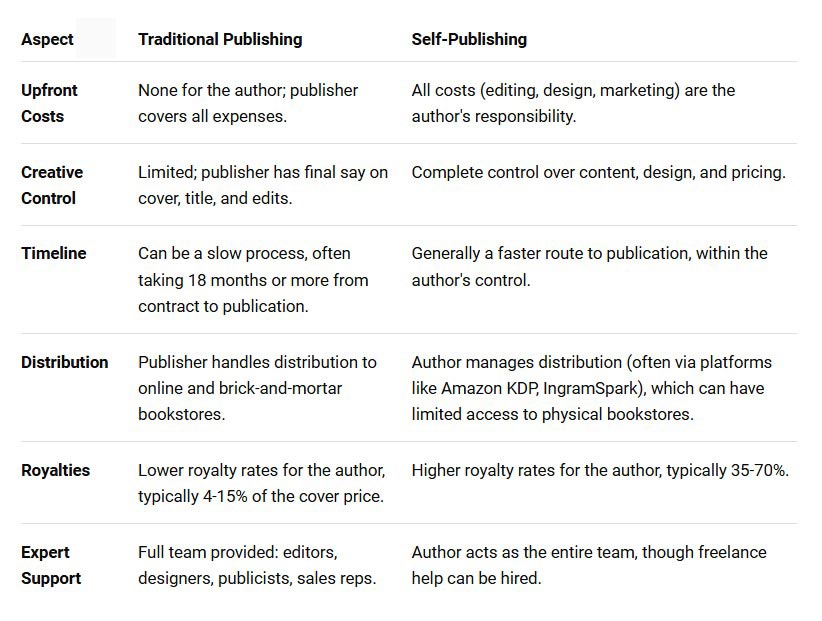
Key Differences at a Glance
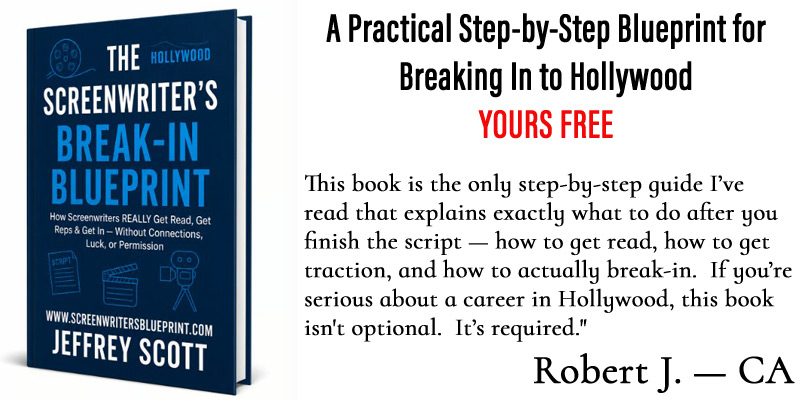
The Hollywood Screenwriter’s Break-In BluePrint
A Practical Step-by-Step Blueprint for Breaking In to Hollywood. “This book is the only step-by-step guide I’ve read that explains exactly what to do after you finish the script — how to get read, how to get traction, and how to actually break-in. If you’re serious about a career in Hollywood, this book isn’t optional. It’s required.”
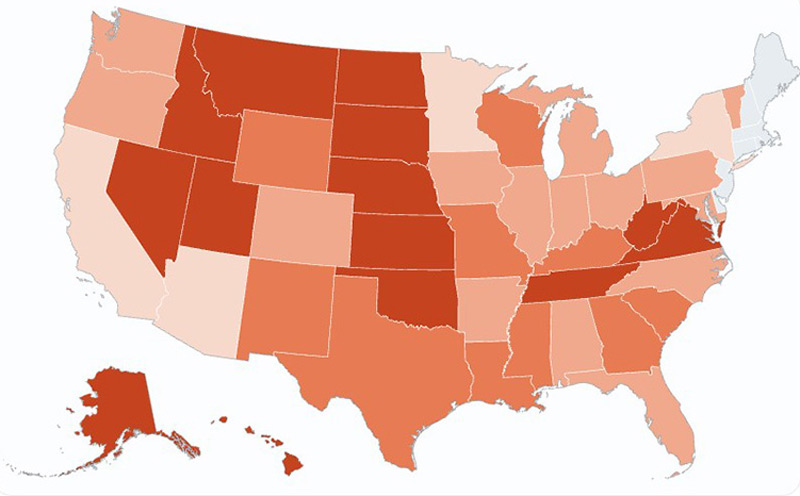
News Desert Map
A shrinking local press, mapped
The United States has lost roughly a third of its newspapers since 2005, and the decline hasn’t slowed. According to Northwestern’s 2025 State of Local News report, 213 counties now have no local news source at all, another 1,524 rely on a single outlet, and about 50 million Americans live with limited or no access to local news.

Submission Tracking
Linda S. Dupie
Recently a writer asked me how I keep track of my submissions, this is something I hadn’t thought about often, but something I do day after day. There are as many ways to track your submissions, as there are writers, for simplicity we’ll look at three of the most common systems I have found while talking to writers. Some writers use their computers, others use index cards, notebooks, and some write the information on the files they keep for each project. Others use all of the above.

What Are Your Chances of Getting Published?
Laura Backes
Most beginning children’s writers are curious about their chances of ever seeing their work in print. Editors have told me that a mid- to large-sized publishing house gets upwards of 5000 unsolicited submissions a year. About 95% are rejected right off the bat (most get form letters, a few promising authors get personalized notes stating why the manuscript was rejected).

How to Write a Novel Synopsis
It’s probably the single most despised document you might be asked to prepare: the synopsis. The synopsis is sometimes required because an agent or publisher wants to see, from beginning to end, what happens in your story. Thus, the synopsis must convey a book’s entire narrative arc. It shows what happens and who changes, and it has to reveal the ending.

Landing An Agent Elements Of A Winning Query
Tips and Updates From Writer’s Digest
Every writer knows a strong query letter is essential for getting an agent. But what goes into a winning query and how does one go about finding representation? “Guide to Literary Agents” asked five recently published authors just that, and they all responded in detail. Here are a few of their pointers on the do’s and don’ts of querying.

Why Article Writing Should Be A Part Of Your Career Development Strategy
Article writing empowers you to establish yourself as an authority, develops communication skills, fuels continuous learning, engages readers, and advances your career.

How To Market Your Book After You’ve Written It
Your beta-readers will also form part of this new team. You’ll need an editor, a proofreader, a cover designer, and book formatter. Yes, Amazon does provide software with which you can create your own covers and formatting. But…do you want your books to look professional and do you want to be serious competition for other authors. Or not?

Love to Write: Here Is How You Can Build Your Career
Building a writing career has never been easier than this age of digitalization has made it.
Publishing, Writing Terms, Acronyms
The majority of these terms came from the glossary in “How To Publish Your Articles A Complete Guide to Making the Right Publisher Say Yes” by Shirley Kawa-Jump

Publisher’s Websites
This list will continue to grow as we receive your links. As with Editors and Agents links, always Google the agency and see if there are any bad reviews or warnings against the publishing house.

The Great Limbo Mystery Question
Megan Potter
I published one middle grade novel with a school book fair house. It was eaten this summer by a bigger school book fair house. My second novel had been edited. The art was done. It was going to press. Kaboom. The big guy says they bought the boxes but not the rights to unpublished books. Was my book published? I got an advance. The people that bought it do not exist any more (I don’t think). Shall I try to sell the book to someone else?
Subscribe

Author Ads
Business Ads
Business Ad