

The site for writers of all genre, and the readers who love them. Find what you want to know.
Plotting
Each plot is a captivating journey that invites readers to traverse the landscape of emotion, tension, and resolution, engaging them in a dance of action and reaction that unfolds through meticulously crafted scenes and sequels. As the narrative sweeps from the initiating event to the exhilarating climax, where the heart of the conflict meets its explosive resolution, every twist and turn serves to deepen the connection between characters and their desires, ultimately leading to an impactful aftermath that resonates long after the final page is turned. Here, you will discover the art of plotting your story, mastering the balance between suspense and release, ensuring that your narrative not only entertains but also leaves an indelible mark on the hearts of your audience.
Plot consists of action and reaction, also referred to as stimulus and response and has a beginning, a middle, and an ending.
The climax of the novel consists of a single action-packed sentence in which the conflict (problem) of the novel is resolved. This sentence comes towards the end of the novel. The main part of the action should come before the climax.
Plot also has a mid-level structure: scene and sequel. A scene is a unit of drama—where the action occurs. Then, after a transition of some sort, comes the sequel—an emotional reaction and regrouping, an aftermath.

8 Best Writing Tips to Become a Best Storyteller
What makes a good story? It’s the details. The little things that make a big difference when it comes to writing.

Love to Write: Here Is How You Can Build Your Career
Building a writing career has never been easier than this age of digitalization has made it.
Turning Points and Plot Points in Storytelling
Jessica Morrell, Top-tiered Developmental Editor Shares Her Thoughts on Turning Points and Plot Points in Storytelling
I want to talk about the thresholds and milestones that happen in storytelling, including films. These milestones are given different names by various experts. Most commonly they’re called turning points or plot points.
7 Ways to Add Great Subplots to Your Novel
7 methods to add great subplots to your novel. Whether you’re planning the fabric of a new story or looking to thread depth into one that’s falling flat, try these 7 methods to add great subplots to your novel for a tightly woven plot. Editor’s Note: This article on novel writing by Elizabeth Sims first appeared in Writer’s Digest.

3 Ways to Know When to End Your Chapters
This is one issue for which you should not turn to the classics for help. In the days of Dickens and Tolstoy, the first few pages of each chapter served to get the reader ready for the events to come. Have you ever been to an elaborate theatrical production during which the curtain remains up through intermissions so you can see the workers shifting and turning the huge sets on their groaning sleds and rollers? That’s what I’m reminded of when I start a chapter by Melville or Hugo.
7 Excellent Plotting Tips from Agatha Christie
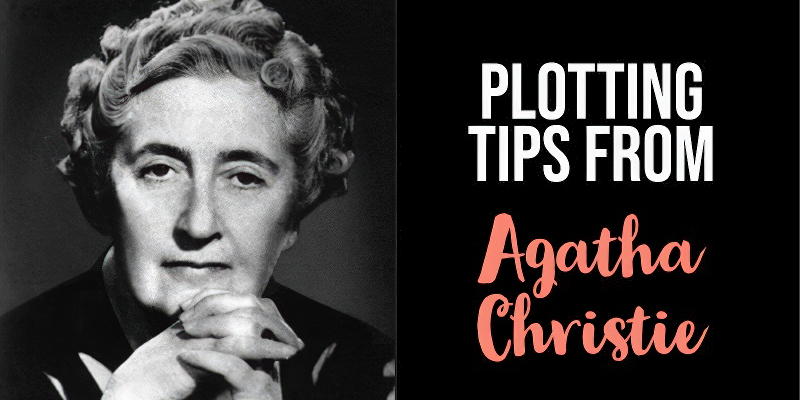
In this post, we share seven plotting tips from Agatha Christie, one of the world’s most prolific and profitable mystery novelists. Agatha Christie is still one of the world’s bestselling fiction writers. Dame Christie is credited with the creation of the modern mystery fiction genre – especially cosy mysteries. Miss Marple and Hercule Poirot are two fictional characters that have stood the test of time. They have come to inspire the creation of countless fictional sleuths. If you would like to improve your elements of plotting, Christie is a good author to study.
Does Your Plot Need a Subplot?
If you’re a writer, your mind is already racing. You’ve turned every telescope in the world that direction, you’ve sent fighter jets up and you’ve thought of at least three main characters — a scientist to figure out what’s happening, his hysterical wife and perhaps the egotistical head of the research department who just won’t listen.

Slang and Jargon Souces
A list of jargon and slang sources. Jargon is special words or expressions that are used by a particular profession or group and are difficult for others to understand. It is the specialized language of a specific group, trade, or profession, often using terms that are difficult for outsiders to understand.

What NOT to Do When Beginning Your Novel
No one reads more prospective novel beginnings than literary agents. They’re the ones on the front lines — sifting through inboxes and slush piles. And they’re the ones who can tell us which Chapter 1 approaches are overused and cliche, as well as which techniques just plain don’t work. Below find a smattering of feedback from experienced literary agents on what they hate to see the first pages of a writer’s submission. Avoid these problems and tighten your submission.

Writing the Novel by the Numbers
By Jack Bludis awa Jack Burns
Originally titled: Mystery by the Numbers In answer to the question about how novels get written: There are several ways to write a novel, one is to wing it, which works if you’ve done a lot of reading and a lot of writing. Another is to do bits and pieces and string them together, this works too, but it can drive you crazy.

The All Purpose Plot
By Jack Bludis awa Jack Burns
The basic plot work for most stories, novels and screenplays — Here it is. A sympathetic lead character has a desperate need for something — knowledge, success, love, a solution, to avoid danger. He or she makes an effort to reach success or achieve what he needs.
Subscribe

Author Ads
Business Ads
Business Ad