

The site for writers of all genre, and the readers who love them. Find what you want to know.
7 Excellent Plotting Tips from Agatha Christie
By Alex J. Coyne.
Writer’s Wrte
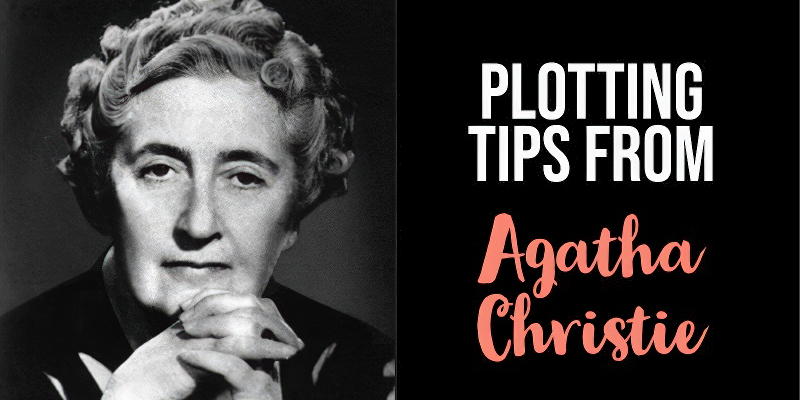
In this post, we share seven plotting tips from Agatha Christie, one of the world’s most prolific and profitable mystery novelists. Agatha Christie is still one of the world’s bestselling fiction writers. Dame Christie is credited with the creation of the modern mystery fiction genre – especially cosy mysteries. Miss Marple and Hercule Poirot are two fictional characters that have stood the test of time. They have come to inspire the creation of countless fictional sleuths. If you would like to improve your elements of plotting, Christie is a good author to study.
Who Was Agatha Christie?
Dame Agatha Mary Clarissa Christie (born 15 September 1890, died 12 January 1976) was an English writer best known for her mystery fiction books and short stories. Christie wrote 66 detective-style novels. Her work has sold more copies than both Shakespeare and the traditional King James Bible. Cards On The Table and Murder On The Orient Express are just two great novels to recommend for writers who would like to know Agatha Christie better.
Here’s what writers can learn from one of the most readable and accessible authors of our time.
MUST-READ: Analysing Agatha Christie – The Best-Selling Novelist Of All Time
7 Excellent Plotting Tips From Agatha Christie
1. Start Plotting
‘There is always, of course, that terrible three weeks, or a month which you have to get through when you are trying to get started on a book. There is no agony like it.’ – Agatha Christie: An Autobiography Beginning a story is one of the most difficult parts of writing.
Writers like Stephen King and James Patterson agree. Beginning the story is sometimes more difficult than getting to the end.
What separates an ambitious writer from everyone else?
Ambitious writers write, while everyone else gets stuck thinking about writing instead.
If you want to be a writer, start by plotting your story first.
MUST-READ: What Is A Plot? – A Writer’s Resource
2. Let Your Plot Develop
‘Walking or just washing up, a tedious process. […] Years ago I got my plots in the tub, the old-fashioned, rim kind – just sitting there, thinking, undisturbed, and lining the rim with apple cores.’ – NY Times Interview, Quiet Murders Suit Miss Christie (1966)
Every writer has their concept of where ideas come from. Each writer also has their own method of getting there.
Agatha Christie found her ideas by letting her mind run wild while she was busy doing other things. It’s a technique that thousands of writers have used before her.
If you think that you might have an excellent idea for a plot, let your mind stew around the plot for a while. Give it a chance to develop, and take notes.
Plots develop in the writer’s imagination, and it’s never advised to ‘force’ the idea process. You can be creative about it though.
3. Use Your Interests (For Colourful Plotting)
Agatha Christie had a wide scope of interests. These included other writers’ fiction, archaeology, and card playing. The best writer is diverse in what they study.
Pop culture references can enrich writing. Use the pastimes, hobbies, and cultural references you enjoy when plotting. If it’s a topic you know well, it can help your plot.
When reading, do you enjoy exploring topics that you’ve never learned about before?
Remember that your readers will feel the same.
Agatha Christie included references to contract bridge in her work often. She included them in Cards On The Table as a central plot element.
4. Plot Your Character’s Flaws
Characters require a great deal of depth and background. People like to read about characters they can relate to.
Agatha Christie created one of the greatest fictional detectives of all time. This did not mean she liked Hercule Poirot on a personal level.
Instead, he made a great character on paper, and this included his undesirable traits, too.
Writers should develop background, flaws, sharp edges, and history for their characters. The reader might never even see these.
5. Plotting Characters & Their Potential
‘Everyone is a potential murderer. In everyone there arises from time to time the wish to kill, though not the will to kill.’ – Agatha Christie, Curtain
Writers use their skills to create monsters, stress, and suspense in the fictional realm. Writing can be a pretty dark endeavour.
Agatha Christie never denied the potential darkness of being a mystery fiction writer. Instead, she embraced it by using the psychology of human potential throughout her work.
For plotting, an understanding of human psychology is essential.
All your characters have potential. They can do anything within the context of your story. What are you going to make them do? Answer this question, and you start to develop plots and sub-plots.
Motivation and potential are powerful attributes for your characters. Developing this is part of creating a decent plot.
6. Cause & Effect Drives Your Plot
‘To get at the cause for a thing, we have to study the effect.’ – The Mysterious Mr Quin
Two of the most important questions for a fiction writer are ‘What if?’ and ‘What happens next?‘
The question ‘What if?’ is an essential one for cause. ‘What happens next?’ is important for effect.
For plotting to work, one thing has to lead into the next. That’s cause and effect at work. If this happens, what will happen next?
Outlines are recommended, especially for writers who would like to write mystery or horror stories with intricate plots.
7. Collaborative Plots Aren’t For Everyone
‘I’ve always believed in writing without a collaborator, because where two people are writing the same book, each believes he gets all the worries and only half the royalties.’ – QI Interview, Best Quotes of ’54, ’55, ’56
Writers can expect to spend hours alone while plotting, writing, and editing.
Some writers prefer to share the task – like James Patterson. Decide where you fit as a writer, and realise that with collaboration comes responsibility.
Are you more like Patterson, or do you prefer to plot alone?
The Last Word
We hope this article with its seven plotting tips from Agatha Christie has helped you to write better, clearer mystery fiction that will captivate your readers.
… Full Article… https://www.writerswrite.co.za/7-excellent-plotting-tips-from-agatha-christie/
AGENTS & EDITORS
- Agents: Knowing When To Hold One and When To Fold
- Copyright Primer, Know Your Rights
- Getting Offers from Multiple Literary Agents
- Landing An Agent Elements Of A Winning Query
- Literary Agents List
- Preditors and Editors
- Publishing, Writing Terms, Acronyms
- Tips for a Successful Editor Appointment
- Want More? Here’s How to Get It
- What NOT to Do When Beginning Your Novel
- Windup for the (Story) Pitch
CALLS FOR SUBMISSIONS

CALLS FOR SUBMISSIONS MAIN PAGE
- 2026 SEP Calls For Submission
- 2026 AUG Calls For Submission
- 2026 JUL Calls for Submissions
- 2026 JUN Calls for Submissions
- 2026 MAY Calls for Submissions
- 2026 APR Calls for Submissions
- 2026 MAR Calls for Submissions
- 2026 FEB Calls for Submissions
- 2026 JAN Calls for Submissions
- 2025 DEC Calls for Submissions
- 2025 NOV Calls for Submissions
- 2025 OCT Calls for Submissions
CHARACTERIZATION
CONFLICT
DIALOGUE
GRAMMAR & FORMATTING
GRAMMAR & FORMATTING MAIN PAGE
- Achieving 250 Words / 25 Lines Per Page
- And Sammy, Too? Oh, No!
- Changing Double Hyphens to EM Dashes in Word
- Edit Easier
- High Hopes–Avoiding Common Mistakes
- Misused Words
- Navigating In Your Novel
- Proofreaders Marks
- Research Links
- Rules for Writers
- Slang and Jargon Souces
- Tightening Your Manuscript and Trimming the Word Count
JOBS / MARKETS
- 3 Ways to Make Your Non-Fiction Article Pitch Stand Out
- 35 Online Work Ideas to Earn Good Money Whilst Studying
- An Interview with Holly Ambrose
- Beyond the Basics
- Copyright Primer, Know Your Rights
- Finding Markets Fiction and Nonfiction
- Freelance Writing 101
- Getting Offers from Multiple Literary Agents
- How To Market Your Book After You’ve Written It
- How to Write a Novel Synopsis
- How To Write Your Own Press Releases
- Magazine Links
- Making Money As a Corporate Freelancer
- Market News–All Genres
- Need a Clip? Open a Newspaper
- Newspaper Writing Resources
- Publisher’s Websites
- Selling to Children’s Markets
- Submitting to UK Markets
- Syndication 101
- the Power of the Press
- To Specialize, or Not to Specialize?
- Ultimate Guide to Being a Freelancer 2026 Update
- What Are Your Chances of Getting Published?
- Why Article Writing Should Be A Part Of Your Career Development Strategy
- Why E-Books?
- Write Your Way to $1000 a Month
- Youth Writing Markets
PLOTTING
- 3 Ways to Know When to End Your Chapters
- 7 Excellent Plotting Tips from Agatha Christie
- 7 Ways to Add Great Subplots to Your Novel
- 8 Best Writing Tips to Become a Best Storyteller
- Does Your Plot Need a Subplot?
- Love to Write: Here Is How You Can Build Your Career
- Slang and Jargon Souces
- The All Purpose Plot
- Turning Points and Plot Points in Storytelling
- What NOT to Do When Beginning Your Novel
- Writing the Novel by the Numbers
POINT OF VIEW
QUERIES & PROPOSALS
- Agents: Knowing When To Hold One and When To Fold
- Getting Offers from Multiple Literary Agents
- How to Write a Novel Synopsis
- Landing An Agent Elements Of A Winning Query
- Path to Self-Publishing Success
- Publisher’s Websites
- Publishing, Writing Terms, Acronyms
- Science & Science Fiction Writing Organizations
- Submission Tracking
- Surviving a Book Proposal
- Windup for the (Story) Pitch
- Writing a Synopsis & Query Letter
SUBMISSIONS
- Agents: Knowing When To Hold One and When To Fold
- An Interview with Jack Fisher
- Copyright Primer, Know Your Rights
- EBooks-Fears to Possibilities
- How to Write a Novel Synopsis
- Literary Agents List
- Path to Self-Publishing Success
- Publisher’s Websites
- Publishing, Writing Terms, Acronyms
- Science & Science Fiction Writing Organizations
- Selling to Children’s Markets
- Submission Tracking
- Surviving a Book Proposal
- What Are Your Chances of Getting Published?
- Write Your Way to $1000 a Month
- Writing a Synopsis & Query Letter
- Youth Writing Markets
SYNOPSIS
TIP SHEETS & GUIDELINES
TIP SHEETS & GUIDELINES MAIN PAGE
- Achieving 250 Words / 25 Lines Per Page
- Changing Double Hyphens to EM Dashes in Word
- Copyright Primer, Know Your Rights
- How To Write Your Own Press Releases
- Knowing and Finding Your Voice
- Plan for Success
- Publisher’s Websites
- Science & Science Fiction Writing Organizations
- What NOT to Do When Beginning Your Novel
- Why E-Books?
- Working with a Critique Group
WORKSHOPS & CONFERENCES
WRITING CONTESTS
ABOUT WRITING CONTESTS
- A Guide to Assessing Writing Contests
- Writer’s Conferences Do You Really Need To Attend?
- Writing Groups List
- 2026 SEP Writing Contests
- 2026 AUG Writing Contests
- 2026 JUL Writing Contests
- 2026 JUN Writing Contests
- 2026 MAY Writing Contests
- 2026 APR Writing Contests
- 2026 MAR Writing Contests
- 2026 FEB Writing Contests
- 2026 JAN Writing Contests
- 2025 DEC Writing Contests
- 2025 NOV Writing Contests
- 2025 OCT Writing Contests

Subscribe

Author Ads
Business Ads
Business Ad